
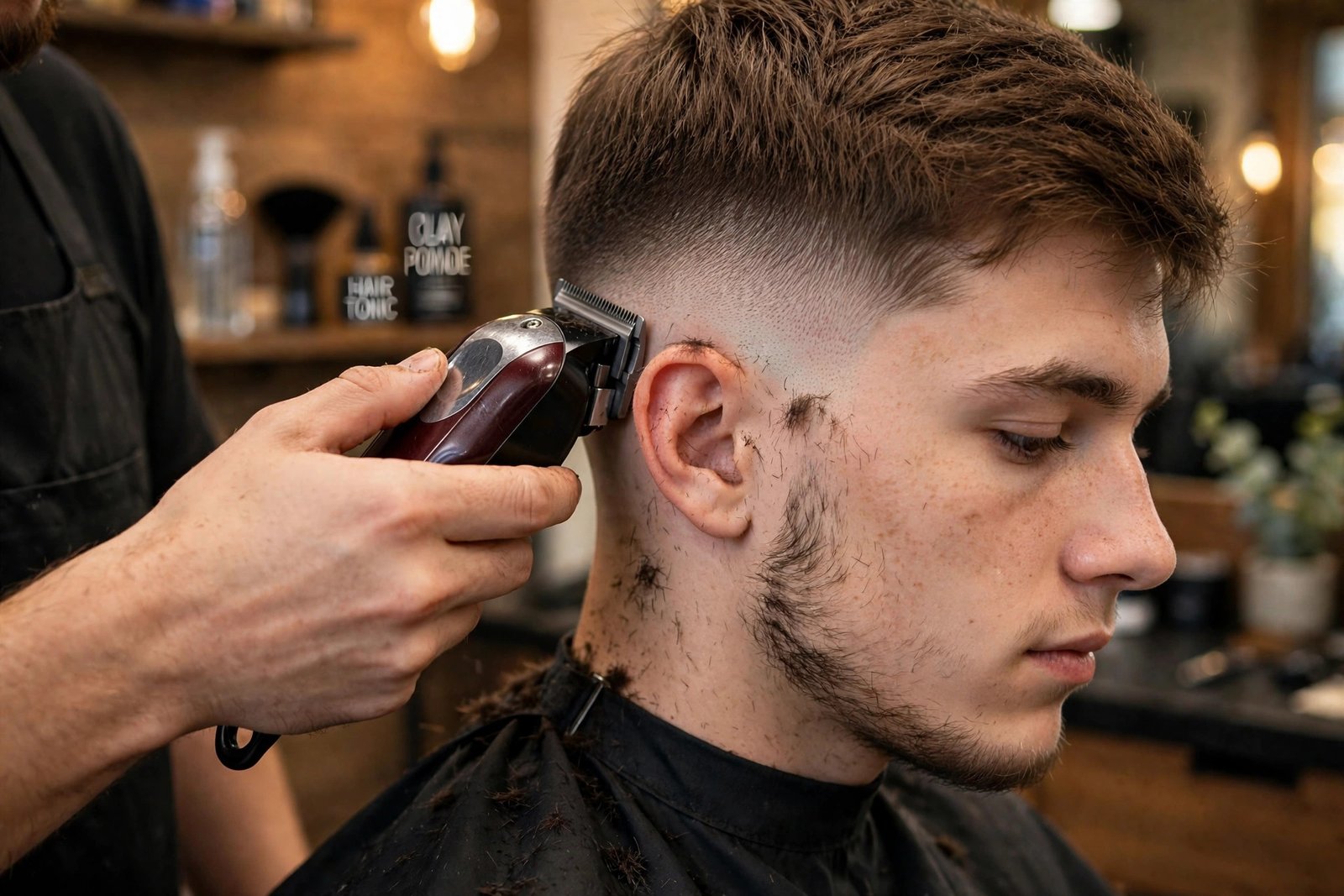
Taper Fade vs Skin Fade: What’s the Difference and Which Should You Get?
Walk into any barbershop and you’ll hear both terms thrown around — but a taper fade and a skin fade aren’t the same cut. Here’s the plain-language breakdown of what each one is, how they differ, and how to pick the right one for your hair.
Taper Fade vs Skin Fade at a Glance
The short version first:
| Taper Fade | Skin Fade | |
| Shortest point | Short — not necessarily bare | Down to bare skin |
| Area faded | Edges: temples, sideburns, nape | Often the full side and back |
| Contrast | Controlled | Maximum |
| Grow-out | Softer and gradual | Shows fast, visible line |
| Upkeep | Every 2 to 4 weeks | Every 2 to 3 weeks |
| Workplace fit | Versatile | Depends on the office |
What Is a Taper Fade?
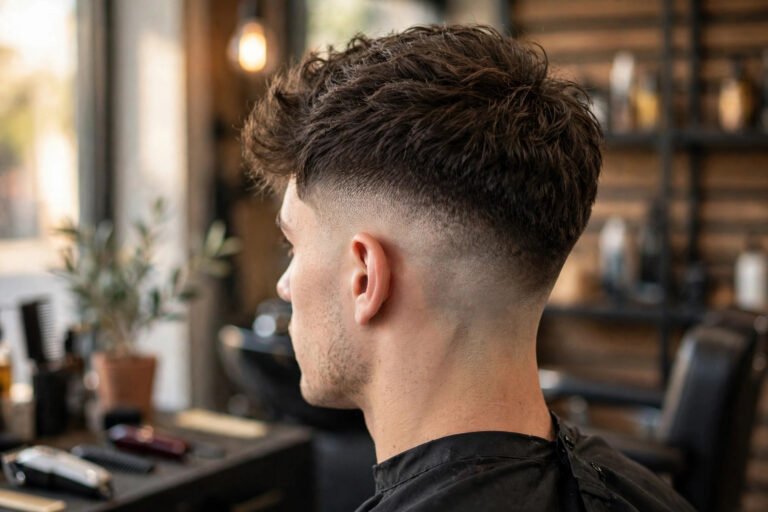
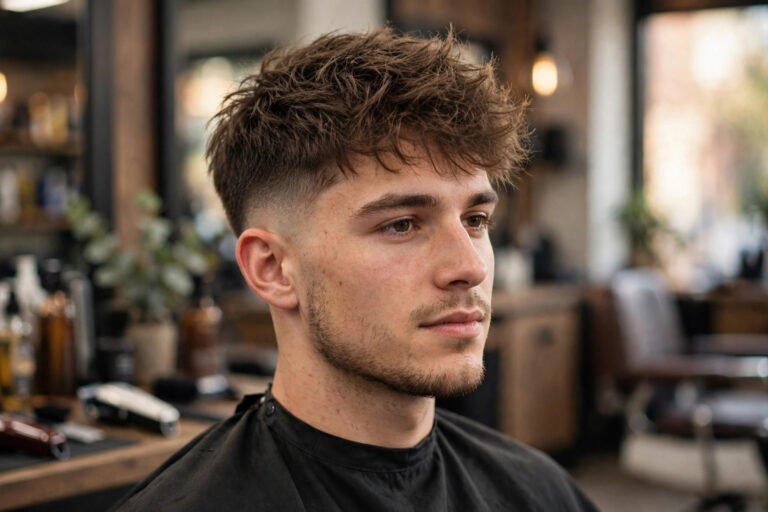
A taper fade gradually shortens the hair around the edges — temples, sideburns, neckline — blending it into the longer hair above. The key detail: it doesn’t have to go down to skin. The shortest point can be a close crop or a soft shadow, and the fade stays localized instead of climbing the whole side of the head.
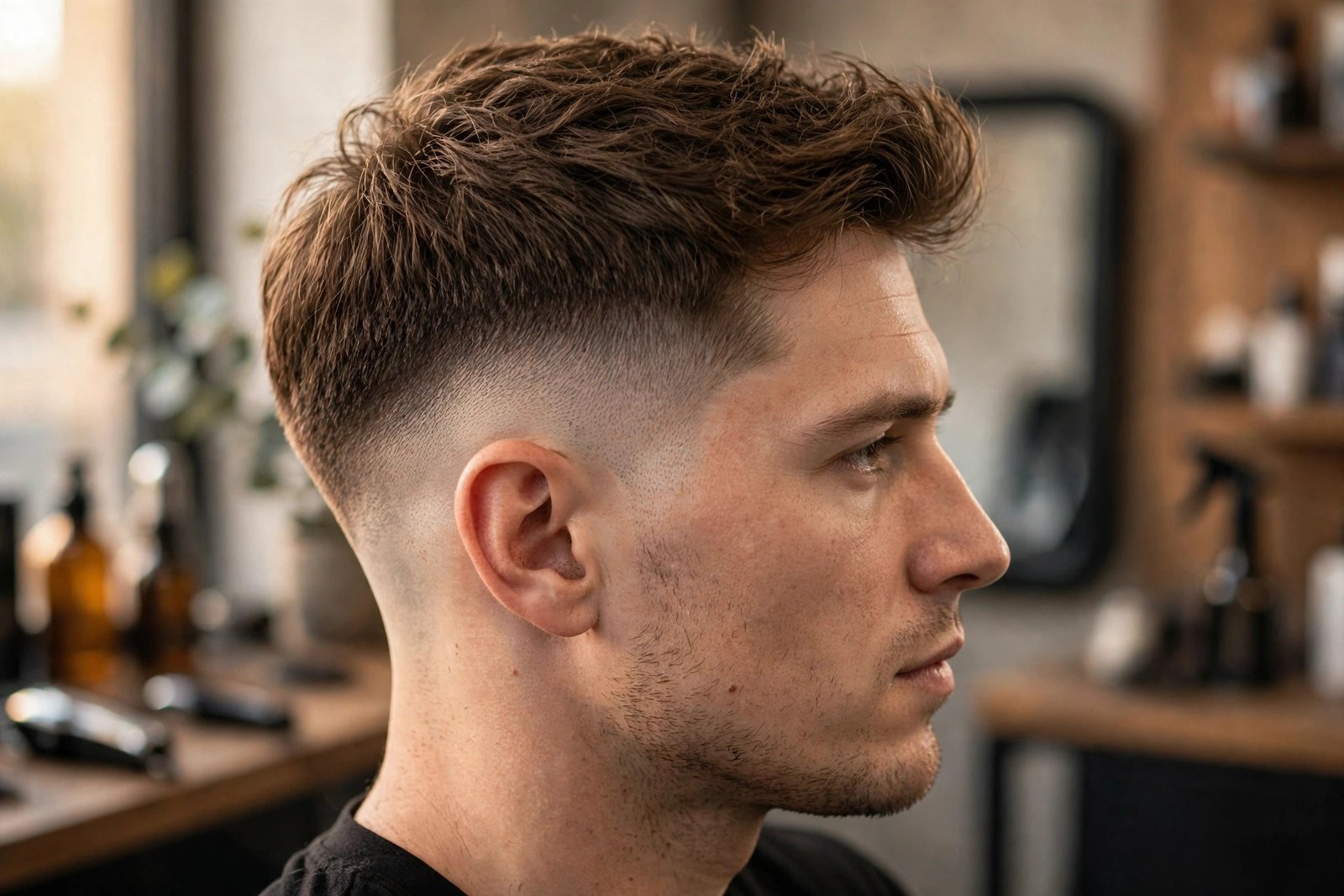
The result is clean and professional with room to dial the boldness up or down — low, mid, or high placement; shadow, zero, or skin finish. Explore the family in our Low Taper Fade, Mid Taper Fade, and High Taper Fade guides. (Background: the temple fade is the classic name for this cut.)
What Is a Skin Fade?
A skin fade — also called a bald fade — takes the shortest point all the way down to bare skin, usually across a larger area of the sides and back. The contrast is dramatic by design: it’s the boldest fade you can get.
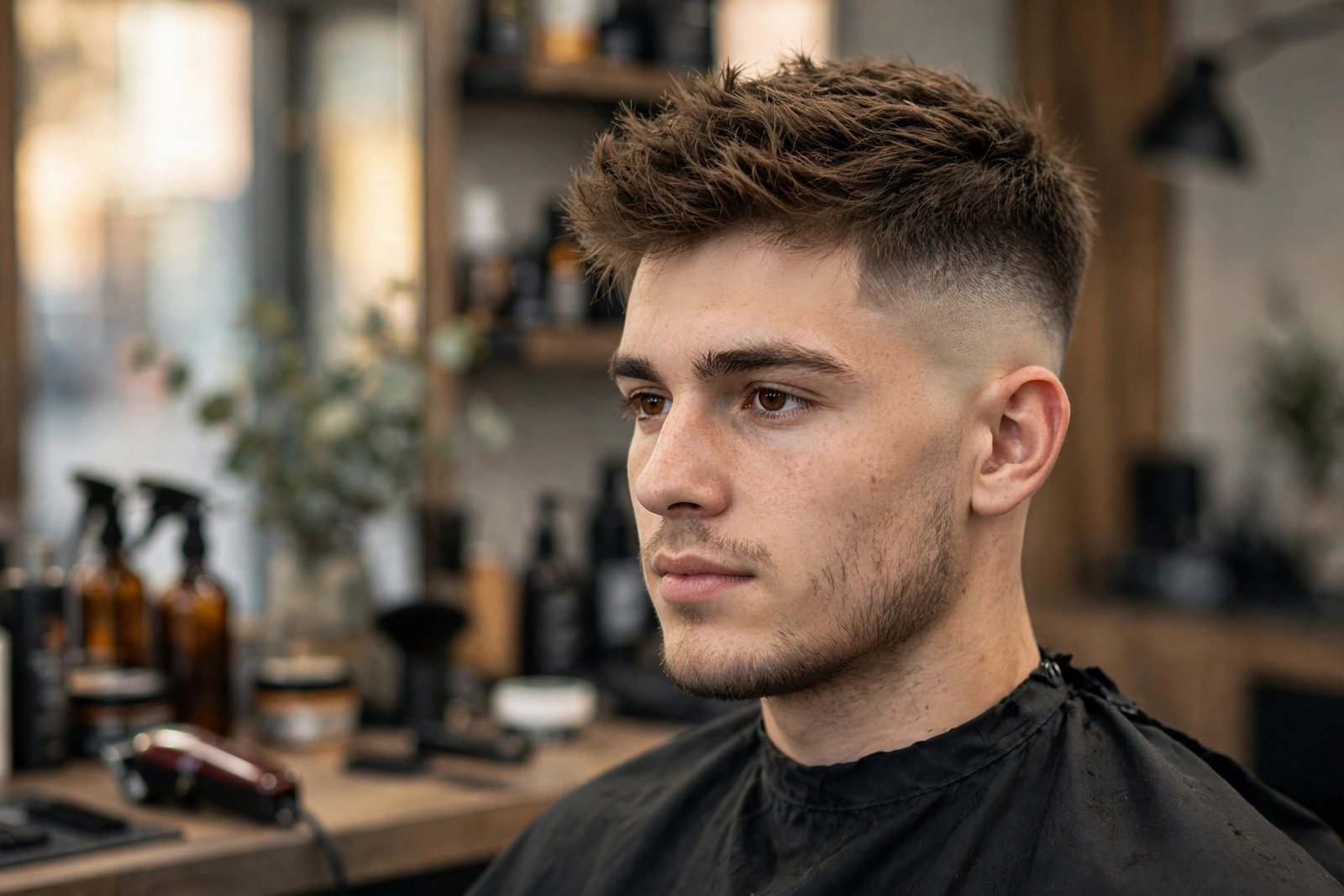
It looks incredibly sharp when fresh, but the regrowth line shows quickly, so it demands the most upkeep of any fade. It’s a commitment, not a casual choice.
Key Differences That Actually Matter
- Scalp exposure: skin fades show a lot of it; tapers show little to none.
- Grow-out: tapers soften gracefully; skin fades grow out with a hard visible line.
- Flexibility: a taper’s finish and height are adjustable visit to visit; a skin fade is all-in.
- Forgiveness: growing out a taper is painless; growing out a skin fade tests your patience.
Which One Should You Choose?
Be honest about your routine:
- Choose the taper fade if you want versatility, work somewhere conservative, prefer lower upkeep, or are trying a fade for the first time.
- Choose the skin fade if you want maximum contrast, don’t mind barber visits every two weeks, and like a bold, modern look.
What to Tell Your Barber
- Use the right word: “taper” and “skin fade” (or “bald fade”) signal different cuts — don’t mix them.
- For tapers, specify the height (low, mid, high) and the finish (shadow, zero, skin).
- For skin fades, confirm how high the bald section should travel up the head.
- Bring reference photos either way — fade terminology genuinely varies between barbers.
FAQs
Can a taper fade go down to skin?
Yes — a “skin taper” ends at bare skin but keeps the fade localized at the edges, unlike a full skin fade that clears the whole side.
Which one grows out better?
The taper fade, by a mile. The skin fade’s harsh line makes every millimeter of regrowth obvious.
Which is better for curly hair?
Both work, but the taper is more forgiving as curls grow — the skin fade needs tighter upkeep to stay sharp.
Are skin fades okay for professional settings?
It depends on the workplace and how the top is styled. The taper fade is the safer default when in doubt.
Final Thoughts
Neither cut is objectively better — it’s a trade between boldness and upkeep. The taper fade is the versatile all-rounder; the skin fade is the statement. Dive deeper with our Low, Mid, and High Taper Fade guides, browse the Hair category, or ask us anything via Contact Us.

One Comment