
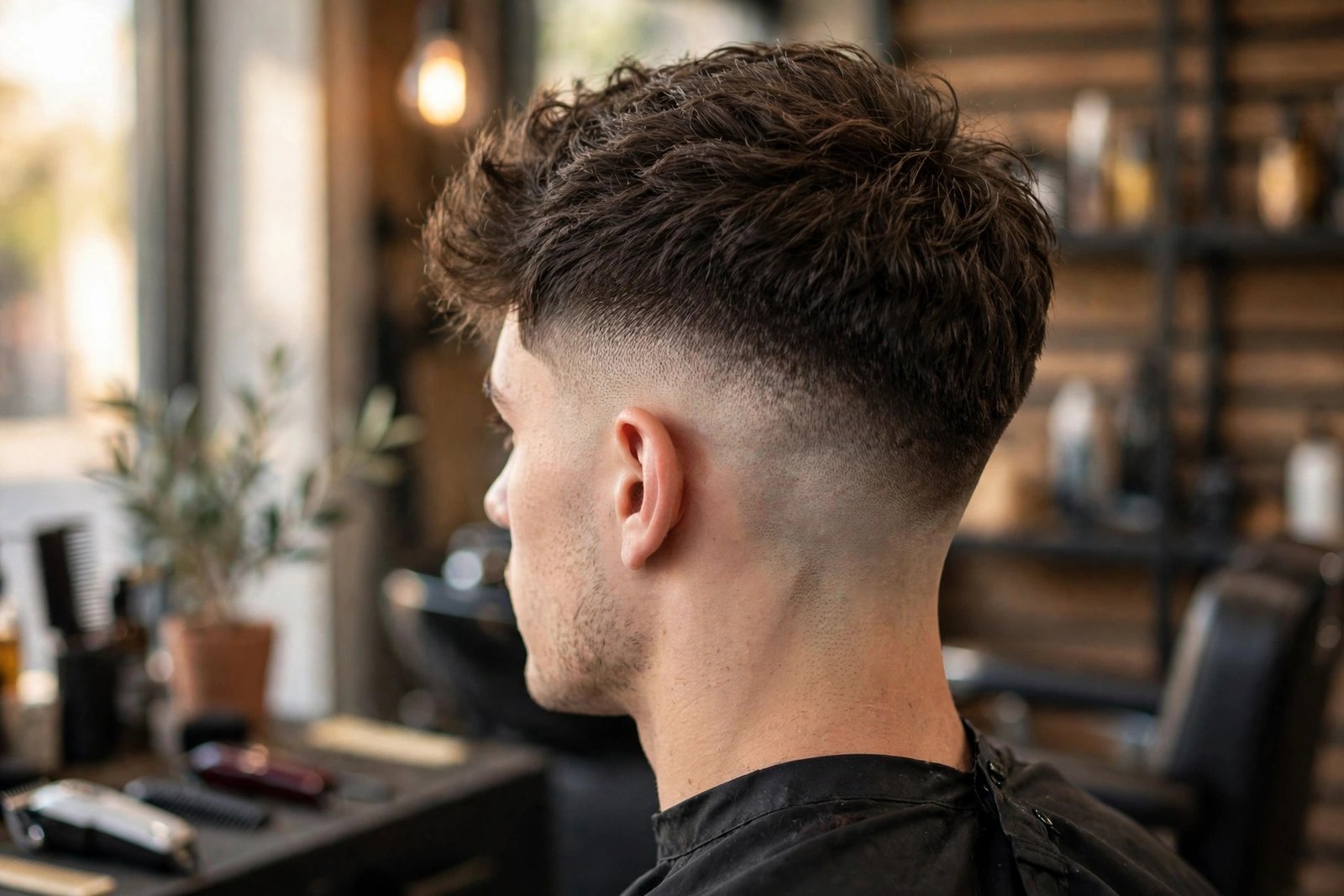
High Taper Fade: Styles, Maintenance & What to Ask Your Barber
What Is a High Taper Fade?
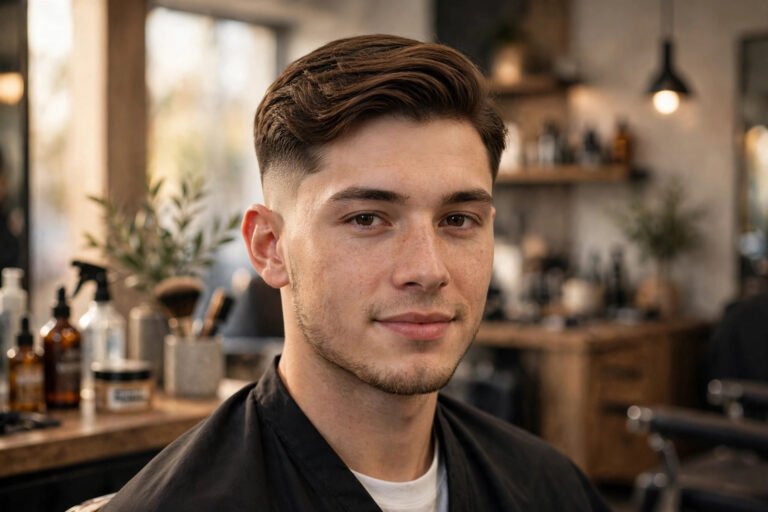
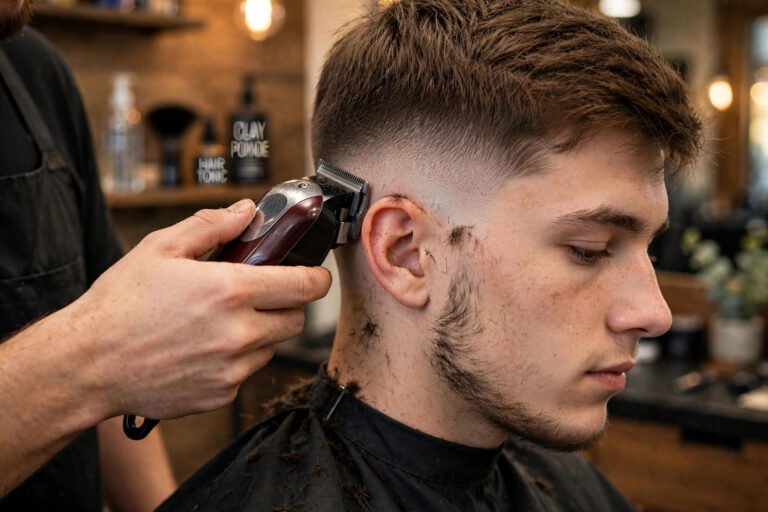
A high taper fade is a haircut where the shortest part of the fade sits high on the head — roughly above the temples and ears — and gradually blends down into very short hair or bare skin around the sideburns and neckline. Above the fade, the hair keeps its length, which creates a strong contrast between the crisp sides and the fuller top.
The key word is “taper”: the fade stays smooth and controlled instead of exposing a lot of scalp all at once. The fading is concentrated around the edges — temples, sideburns, nape — rather than taking the whole side down, so you keep more weight and fullness through the sides.
Think of it this way: a low taper whispers, a high taper speaks up. Same clean idea, placed higher for more definition.
High Taper Fade Styles to Try
One cut, many personalities. Here are the versions men are actually asking for right now.
Classic High Taper Fade
The original and still the most versatile. Neat faded sides rising above the ears, with two to four inches on top that you can brush forward, sweep back, or part to the side. It suits almost every face shape and needs minimal effort in the morning — which is why it has been a barbershop staple for years.
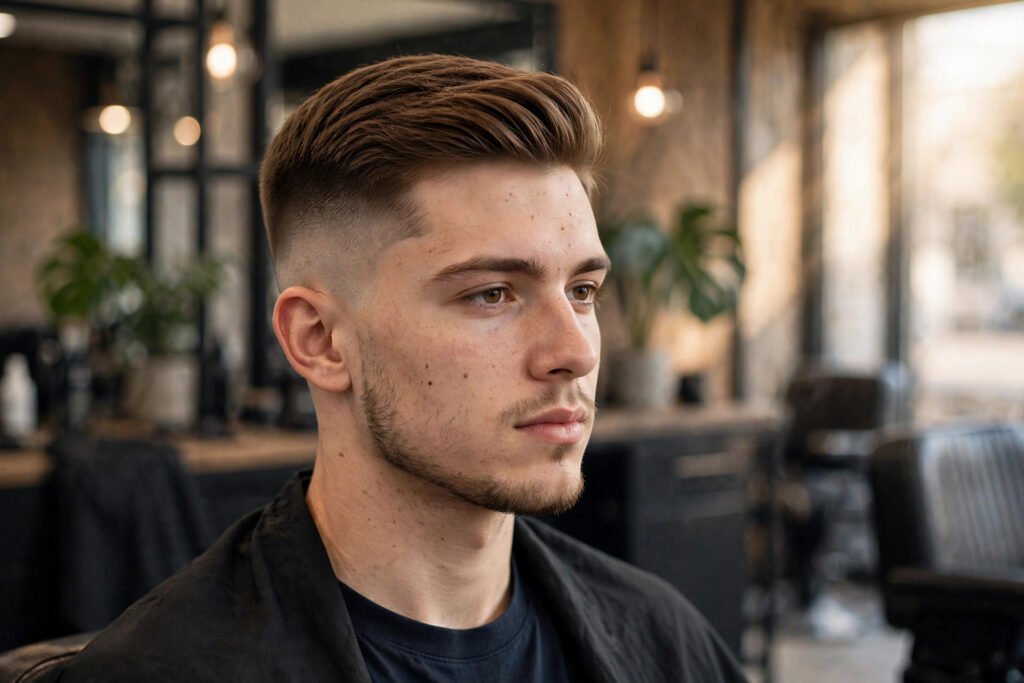
High Taper Fade with a Beard
A beard turns this haircut into a full frame for your face. The trick is in the connection: the taper should melt into the beard with no visible gap at the sideburn. Keep the beard lined up every week or two so it stays as sharp as the fade.
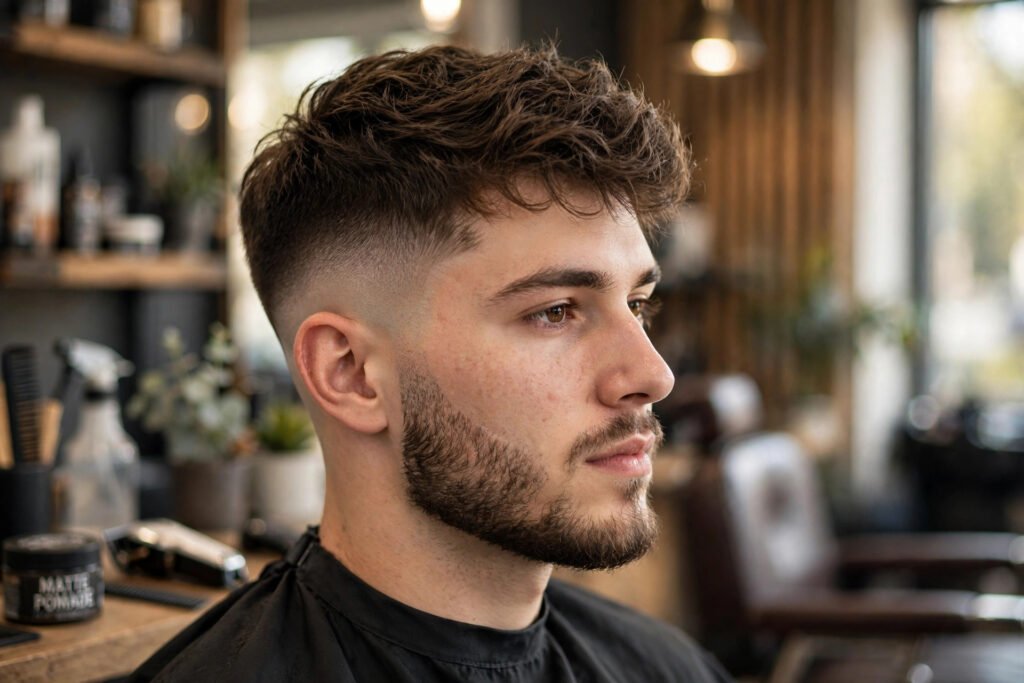
High Taper Fade with Curly Hair
Curls on top, clean lines on the sides — a combination that practically styles itself. The contrast makes your curl pattern stand out. Use a curl cream or light mousse to define the curls and keep frizz down, and leave enough length up top for the curls to properly form.
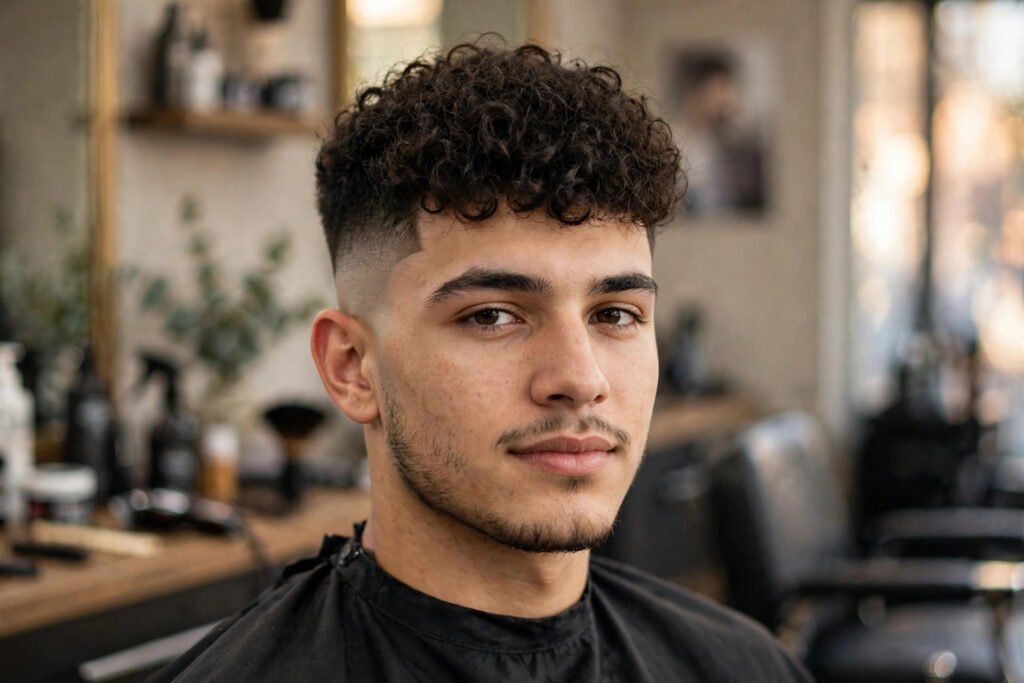
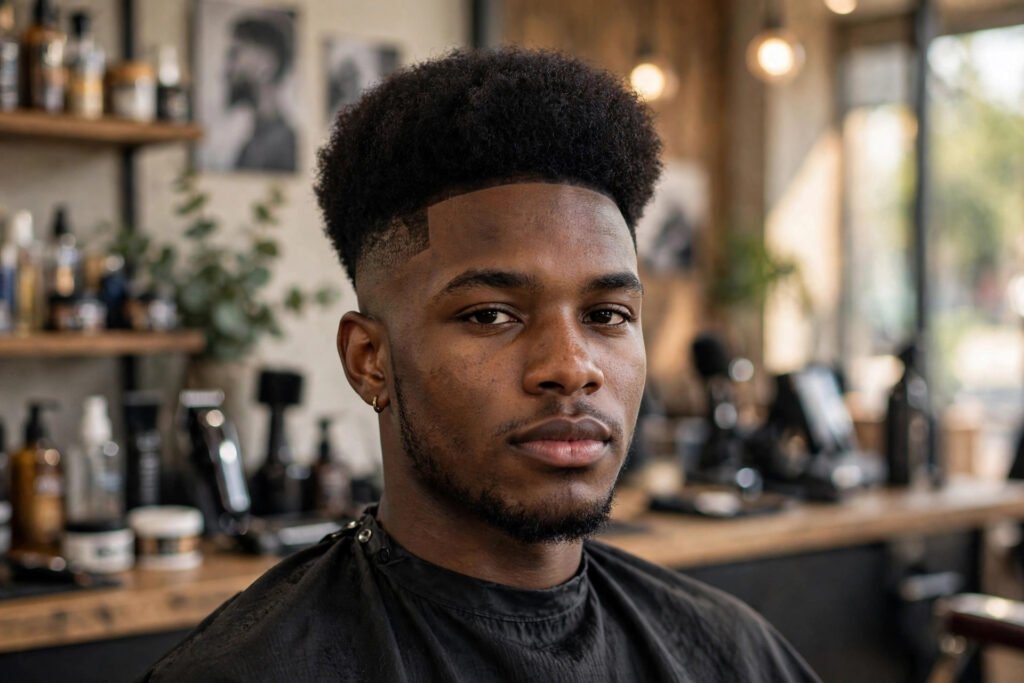
High Taper Fade with an Afro
Keep the crown full and let the taper carve out the sides. The result is a strong, rounded silhouette that looks intentional from every angle. It works beautifully on coily hair — just make sure the top is shaped evenly so the afro keeps its form as it grows out.
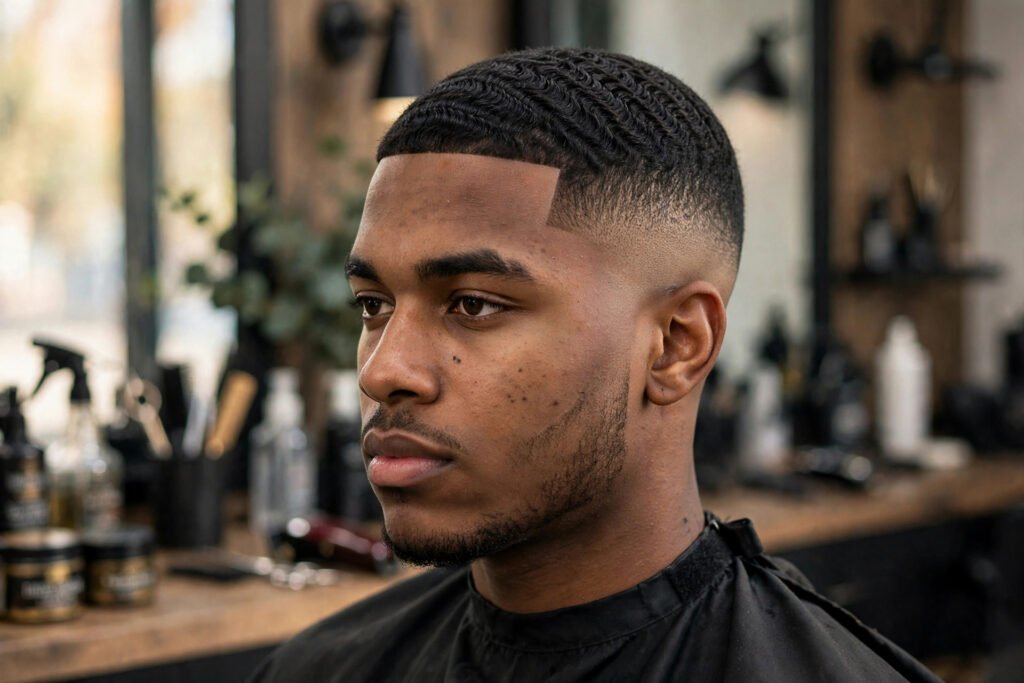
High Taper Fade with Waves
If you are building 360 waves, this is the cut that shows them off. Clean sides put all the attention on the wave pattern up top. The routine is simple: brush daily, wear a durag at night, and use a light pomade to keep the pattern laid.
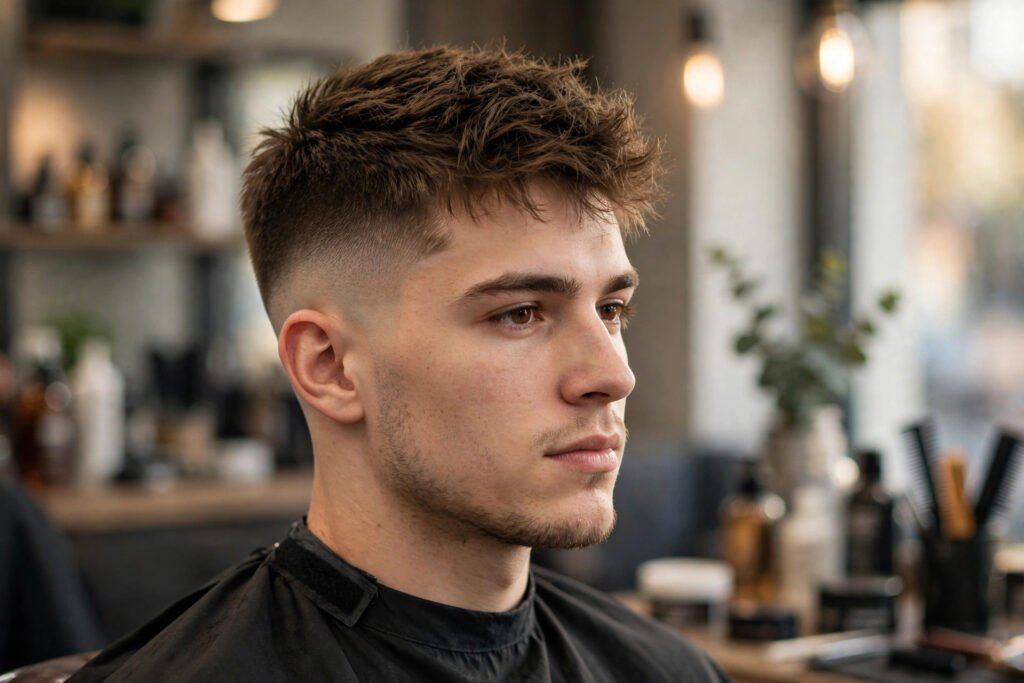
Short Textured Top with High Taper
For the low-maintenance crowd: a short, textured top — like a textured crop or crew cut — paired with the high taper. Towel dry, a dab of matte paste, and you are out the door. Almost no daily styling, but the fade still gives you that fresh-from-the-barber edge.
High Taper Fade vs Low Taper Fade
Not sure which one is yours? Here is the honest breakdown.
| Feature | High Taper Fade | Low Taper Fade |
|---|---|---|
| Fade starts | Above the temples and ears | Down near the neckline |
| Contrast | Bold and sharp | Soft and subtle |
| Scalp showing | More | Less |
| Barbershop visits | Every 2 to 3 weeks | Every 3 to 4 weeks |
| Grow-out | Shows quickly | Grows out gracefully |
| Overall vibe | Statement, modern | Clean, conservative |
Choose the high taper when you want definition and do not mind the upkeep. Choose the low taper when you want something quieter that stays neat for longer. Neither is better — it comes down to how much contrast you want to wear every day.
What to Tell Your Barber
Barbers hear the word “taper” and picture different things, so be specific. Here is your game plan:
- Bring photos. Two reference pictures beat a thousand words — save ones that match your hair texture.
- Name the height. Say “I want the fade to start high, above the temples” instead of assuming “taper” alone explains it.
- Pick your finish. Skin (bare), zero (light stubble), or shadow (soft and subtle)? Decide before the clippers come out.
- Set the top length first. Longer tops give you more styling options later, so discuss the top before the sides get touched.
- Mention the beard. If you want the fade blended into your beard, say so upfront — it needs a different technique.
- Book the next visit. This cut grows out visibly in 2 to 3 weeks, so schedule the touch-up before you leave the chair.
How to Maintain a High Taper Fade
The cut is only as sharp as your routine. The good news: the routine is simple.
- Trims: every 2 to 3 weeks to keep the fade line crisp. Stretching it longer is fine — the grow-out just looks softer, not bad.
- Washing: 2 to 3 times a week is plenty for most hair types. Overwashing strips natural oils and makes the top harder to style.
- Night care: rocking waves? A durag overnight keeps the pattern intact. Curly top? A satin pillowcase cuts down frizz.
- Neckline touch-ups: a quick cleanup of the neckline with a trimmer between visits keeps the whole cut looking fresh.
Styling Products Worth Having
You do not need a shelf full of products — just the right ones for your hair.
| Product | What it does |
|---|---|
| Matte clay or paste | Texture and hold without shine — the everyday hero |
| Pomade | Sleek finish for side parts and slick-backs |
| Curl cream or mousse | Defines curls and fights frizz |
| Wave pomade | Lays waves down and adds light sheen |
| Beard oil | Keeps a paired beard soft and shaped |
| Light-hold hairspray | Locks the style in for long days |
Quick Morning Styling Routine
Five minutes, start to finish:
- Dampen the top — a quick rinse or a few sprays of water.
- Work a small amount of product through damp hair, evenly.
- Shape it: comb into a side part, push up a quiff, or tousle a textured crop.
- Optional: blow-dry on low while shaping for extra volume.
- A light mist of hairspray if it is going to be a long day.
FAQs
How long does a high taper fade last?
About 2 to 3 weeks before the fade line softens noticeably. The top can go longer — it is the faded sides that set the schedule.
Is a high taper fade good for curly hair?
Yes — it is one of the best pairings. The clean sides make curls stand out, and the cut works with the curl pattern instead of fighting it.
What is the difference between a high taper fade and a skin fade?
A taper keeps the fade gradual and localized around the edges; a skin fade can take the whole side down to bare skin for maximum contrast. The high taper sits in the middle: bold but controlled.
Can I do a high taper fade at home?
For between-visit touch-ups, yes — with clippers, guards, and a mirror. The full cut, especially the blend, is genuinely hard to do on yourself. For the real thing, see a barber.
Does it suit all face shapes?
It flatters most face shapes because the height and finish are adjustable. Round faces benefit from extra height on top; longer faces do better with a slightly softer finish. Your barber can tune it to you.
How often should I wash it?
Two to three times a week works for most people. Daily washing is not necessary and can dry the hair out.
Final Thoughts
The high taper fade earns its popularity: sharp contrast, works with nearly every hair type, and flexible enough for the office or a night out. Bring reference photos, be specific about height and finish, keep up with trims every few weeks, and match your products to your hair texture.
Want more guides like this? Browse our Hair category for more — and if there is a haircut you
want us to break down next, let us know through our Contact Us page.
Keep reading: Low Taper Fade guide · Mid Taper Fade guide · Taper Fade vs Skin Fade

2 Comments