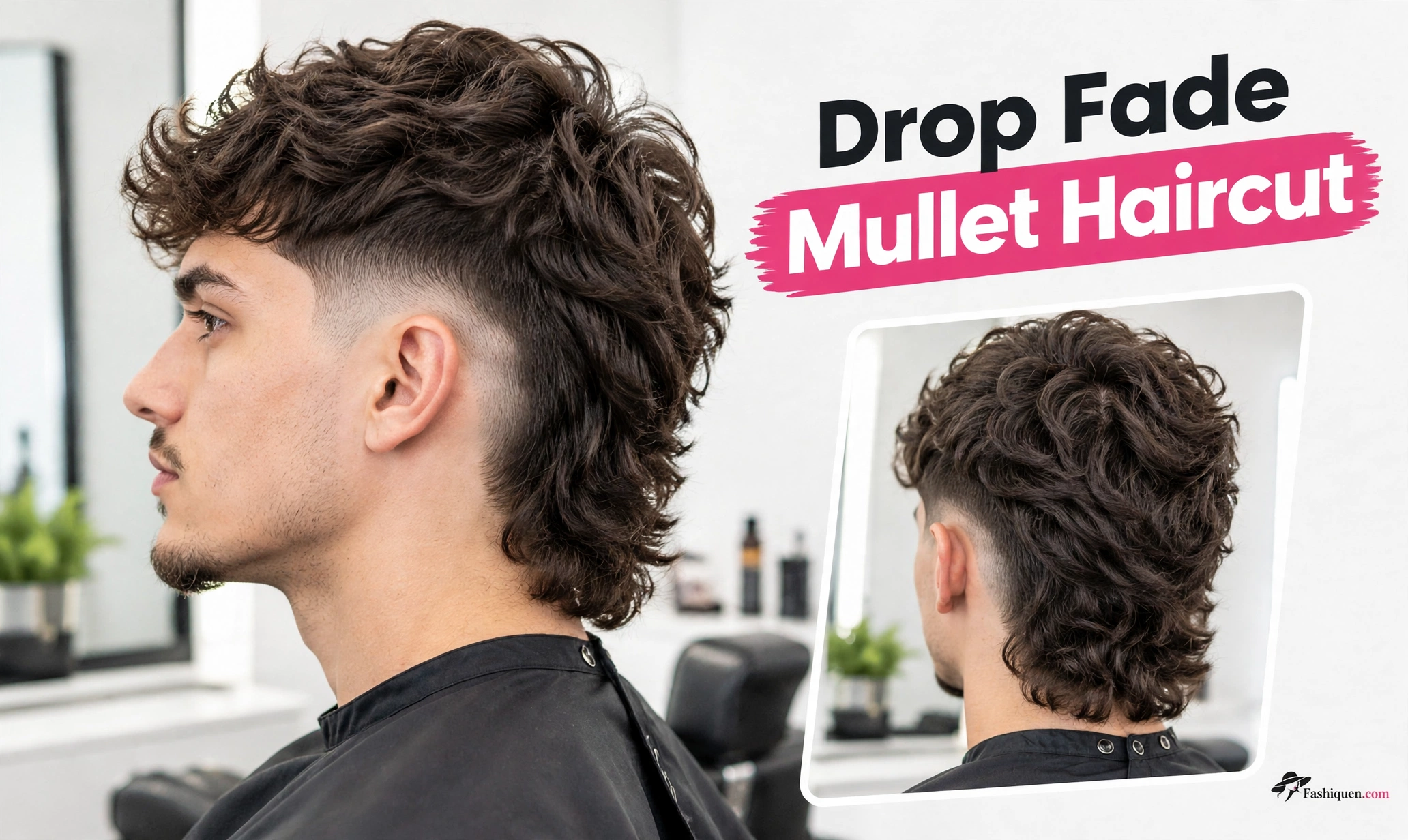
Drop Fade Mullet Haircut: Best Styles, Fade Types, Barber Tips & Maintenance
A drop fade mullet takes the classic “short on top and sides, long at the back” mullet and swaps the standard fade for one that curves down behind the ear. The result is a cut where the shortest hair follows the skull’s shape, then sweeps lower toward the nape, handing off to the longer hair at the back with a clean, deliberate line.
This guide covers how the cut is built, how it differs from burst fade and taper mullets, which fade height to pick, how to adapt it to your hair type and length, and how to brief your barber. It also covers styling, upkeep, and what to do about skin irritation.
What Is a Drop Fade Mullet Haircut?
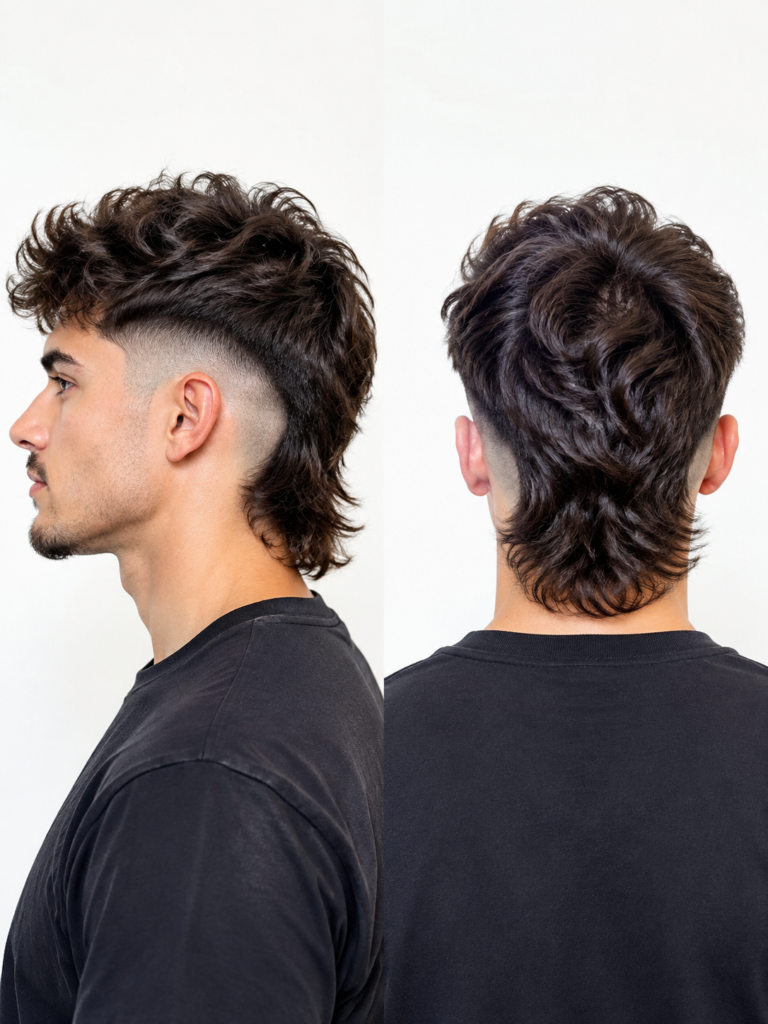
A drop fade mullet combines two ideas. The mullet gives you contrast in length: shorter hair on top and at the sides, longer hair running down the back. The drop fade is a fade whose line doesn’t run straight around the head. Instead, it rises at the front of the temple, then arcs down behind the ear and continues to dip toward the nape.
That dip is the point. On a mullet, the back is the feature, and the drop fade frames it. Rather than cutting a flat horizontal line under the long section, the fade curves with it, so the back looks like it grows out of the head’s natural shape instead of sitting on top of a shaved band.
The Anatomy of a Drop Fade Mullet
Think of the cut in five zones:
- Top: Anything from a cropped, textured cap to longer layers with a fringe. This is where most of the personality lives.
- Sides: Faded, with hair gradually shortening from the upper sides toward the ears. How short it goes depends on the finish (skin, shadow or taper).
- Fade line: The defining curve. It starts relatively high at the temple, travels back over the ear, and drops lower behind it.
- Back: The mullet itself. Length can range from just past the collar to well below the shoulders.
- Neckline: Where the back finishes. It can be left natural and wispy, rounded, squared or tapered. The neckline changes how tidy or rugged the cut looks, and it affects how fast it grows out.
Why the Drop Fade Shape Works With a Mullet
A standard fade runs roughly level around the head. That works well for short cuts, but a mullet is mostly about the back, and a level line underneath it can look abrupt, like the long section was stuck on afterwards.
The drop curve fixes that. It follows the natural curvature behind the ear and around the base of the skull, so the transition from short to long looks intentional. It also gives the sides a sharper outline, which makes the length at the back look more deliberate instead of unkempt. And because the line drops, it leaves more room for the back to sit with a clean edge underneath.
Is a Drop Fade a Mullet? Understanding the Difference
No. A drop fade is a fade shape, and a mullet is a length pattern. You can have a drop fade with no mullet at all (a short crop with a drop fade is very common), and you can have a mullet with no fade (a scissor-cut or taper-only mullet). A drop fade mullet is simply the two combined. If a barber asks whether you want the drop fade “with” a mullet, that’s what they mean: a drop fade on the sides, with length left at the back.
Drop Fade Mullet vs. Burst Fade, Taper and Regular Fade
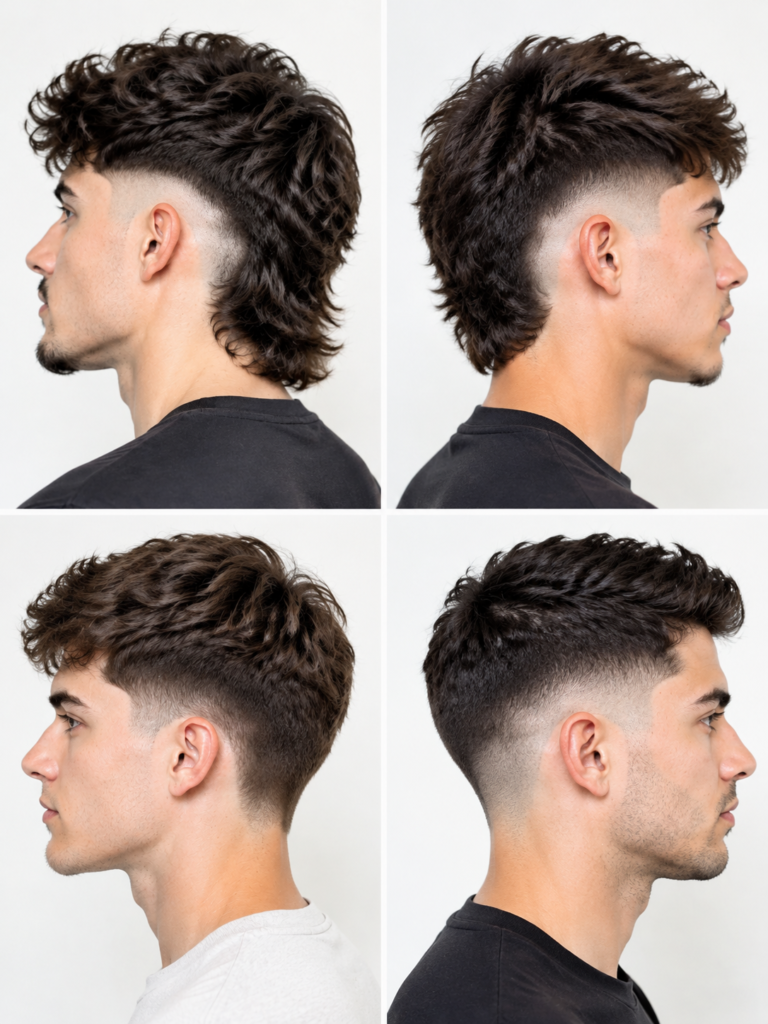
These four terms get used interchangeably online, but they produce different results, especially around the ears and neckline.
| Feature | Drop Fade | Burst Fade | Taper | Standard Fade |
|---|---|---|---|---|
| Shape | Curves down behind the ear | Semi-circular around the ear | Follows the natural hairline | Level or gently sloped line |
| Visual effect | Flowing, directional | Rounded, contrasted | Subtle, soft | Clean, uniform |
| Back length | Pairs naturally with a longer back | Pairs with a long back but creates a defined “pocket” | Blends gently | Works but can look abrupt |
| Edge drama | Medium to high | High | Low | Medium |
| Best for | A smooth, directional mullet | A bold, high-contrast mullet | A soft, low-effort mullet | A neat, conventional mullet |
Drop Fade Mullet vs. Burst Fade Mullet
A burst fade fades around the ear in a semicircle, leaving the hair behind the ear and at the nape longer. It’s often described as a “mohawk-style” fade that radiates outward from the ear. That creates a strongly defined shape, with a noticeable contrast between the faded area and the longer back.
A drop fade, by contrast, doesn’t circle the ear. It sweeps down and back in one continuous arc. If you want a sharper, more sculpted look, the burst fade is more dramatic. If you want smoother flow and a line that reads as one clean curve, the drop fade is the better fit. Burst fades also tend to leave a visible band of length behind the ear that needs more frequent tidying.
Drop Fade Mullet vs. Taper Mullet
A taper only shortens the hair at the hairline, around the ears and neck. It doesn’t take the hair down to skin or a close shadow in the way a fade does. A taper mullet looks softer, grows out more gracefully, and is easier on skin that reacts to close shaving.
The drop fade makes a bigger statement and gives crisper contrast, but it needs more upkeep. If you prefer a more relaxed look, or you’re in an environment where a bold fade isn’t ideal, a taper mullet delivers the mullet silhouette with less edge.
Drop Fade Mullet vs. Standard Fade Mullet
A standard fade mullet uses a level fade, so the line sits at the same height around the head. It’s clean and traditional, but it doesn’t follow the skull’s curve, so the back can look more “attached” than blended. The drop fade is built to look continuous. Standard fades are still a good option for people who like a more conventional, tidy appearance or want an easier cut to maintain with a different barber each time.
Is a Taper or Drop Fade Better for a Mullet?
Neither is universally better. A drop fade suits you if you want clear shape, sharp edges and visible structure, and you’re happy to see a barber regularly. A taper suits you if you want something understated, lower maintenance and kinder as it grows out. If you’re unsure, a low drop fade with a shadow or taper finish is a sensible middle ground.
Low, Mid or High Drop Fade Mullet: Which Should You Choose?
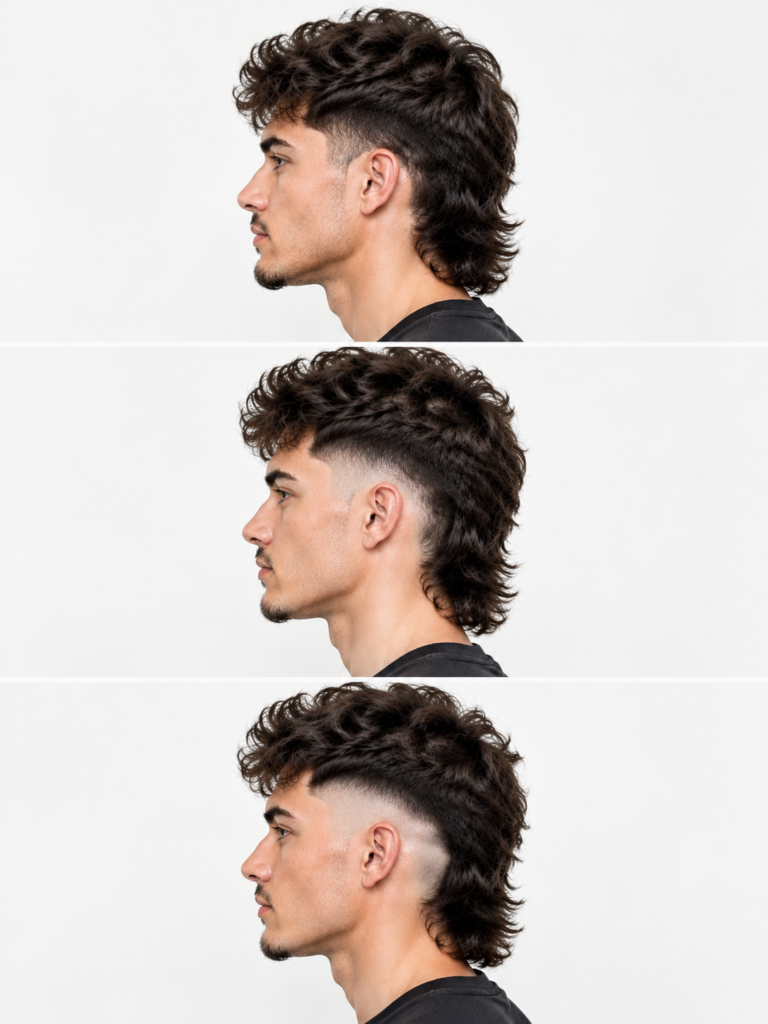
Fade height describes where the fade begins on the sides. Because a drop fade curves, “height” refers to where the fade starts at the temple before it dips behind the ear.
Low Drop Fade Mullet
The fade starts close to the ear and runs just above the hairline. This leaves more length on the sides, so the cut looks softer and more conservative. It suits people who want contrast without going dramatic, and it works well in environments where a more subdued look matters. It’s also the easiest to grow out because there’s less bare skin or close-cut hair to grow back.
Mid Drop Fade Mullet
The fade starts around the temple area, roughly midway between the ear and the top of the head. This is the most balanced option: noticeable but not extreme. It gives the sides a clean, cropped look while leaving enough hair on top to style. If you’re unsure where to start, mid is the safest choice.
High Drop Fade Mullet
The fade starts higher, closer to the crown of the head’s upper sides. It creates a strong separation between the short sides and the longer top and back. The effect is bold and sharp, and it emphasises the mullet’s contrast. The trade-off is upkeep: because so much of the head is cropped close, it loses its crispness quickly, and the grow-out phase looks more obvious. It can also make a long face look longer, so consider your head shape.
Skin, Shadow or Taper Finish for a Drop Fade Mullet
The fade height tells the barber where to start. The finish tells them how close to go at the bottom.
- Skin finish (bald fade): The fade reaches bare skin. This gives maximum contrast and a very clean look, but it requires the most frequent refreshing and is the most likely to cause irritation.
- Shadow finish: The fade stops just before skin, leaving a faint shadow of stubble. It looks sharp but a little softer, and it grows out more gracefully than a skin fade.
- Taper finish: The fade ends at a short but visible length. It’s the most forgiving for skin and grow-out, and the least dramatic.
Which Fade Is Best for a Mullet?
It depends on how much contrast you want and how much upkeep you’ll tolerate. For a pronounced, modern look, a mid or high drop fade with a shadow finish is a popular choice. For something more relaxed, a low drop with a taper finish works well. For most first-timers, a mid drop with a shadow finish balances impact and practicality.
Best Drop Fade Mullet Haircut Styles by Hair Type and Length
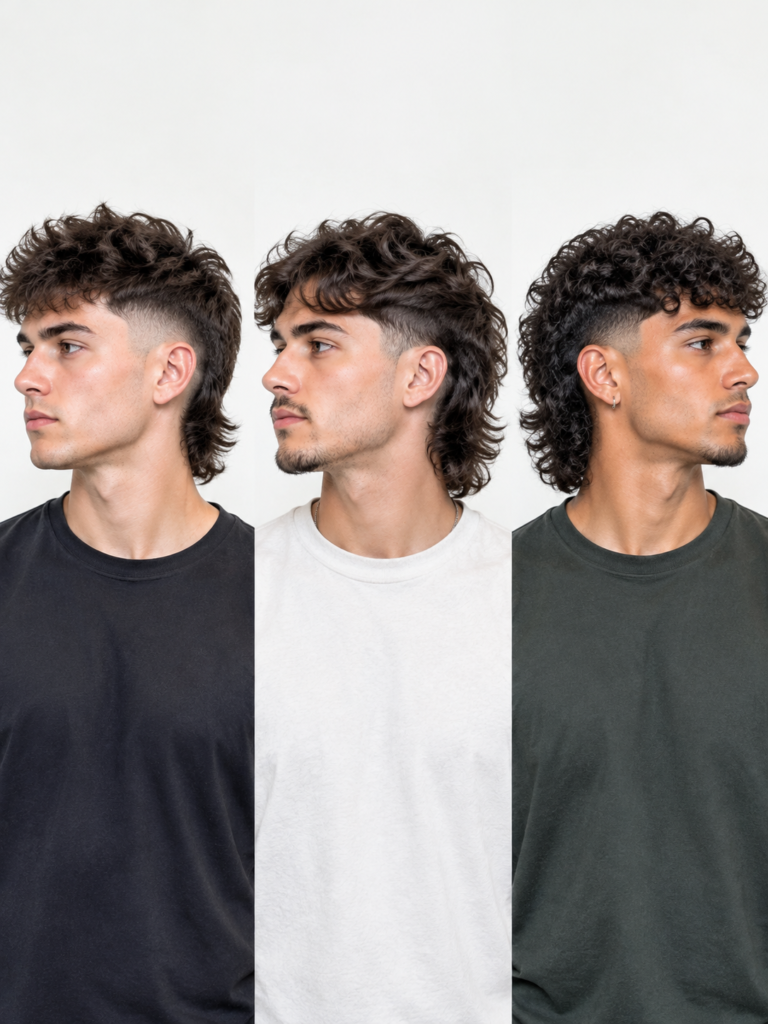
Each of these eight styles differs in shape, length, texture or finish, not just in name.
Straight Hair Drop Fade Mullet
Straight hair shows the fade line clearly because there’s no texture to soften it. That makes precision matter. A sleek version keeps the top slightly longer and combed back or pushed to the side, with the back falling straight. Straight hair can look flat on top, so ask for some internal texturising or point-cutting to add movement. Because it holds a shape well, it’s easier to keep a clean outline, but it also shows uneven cutting.
Wavy Hair Drop Fade Mullet
Wavy hair adds natural volume and movement, which suits the mullet’s relaxed energy. The back often flicks or curls slightly at the ends, which gives the cut a loose, lived-in feel. Leave enough length on top for the wave pattern to show; very short wavy hair can end up looking frizzy rather than shaped. A mid drop fade pairs well because the contrast highlights the waves above it.
Curly or Coily Hair Drop Fade Mullet
Curls and coils bring serious shape to a mullet. The fade sharpens the sides while the curls on top and at the back become the focus. A key consideration is shrinkage: curly and coily hair appears much shorter than it is when dry, so the back may look shorter than you expect. Ask your barber to cut the top and back with that in mind, and be ready to specify whether you want the curl pattern defined or left fluffy. A high or mid drop fade creates striking contrast against dense curls. Coily textures can also be shaped into a more structured, sculpted back.
Short Drop Fade Mullet
Not everyone wants a long back. A short version keeps the top cropped and the back just long enough to cover the nape or sit slightly over the collar. It’s easier to manage, suits conservative environments, and works well on thicker hair that would otherwise get heavy. The mullet is subtle here, so the drop fade does most of the visual work.
Long, Layered Drop Fade Mullet
This version leaves the back well past the collar, sometimes to the shoulders, and adds layers so the length doesn’t hang heavy. Layers help the hair move and prevent a flat, triangular silhouette. This is the most dramatic and most high-maintenance version. It needs good hair health because the back is on display, and it takes time to grow. It tends to work best with some natural density.
Textured Drop Fade Mullet
A textured mullet uses cutting techniques like point-cutting, slicing or razor work to create a broken, uneven finish rather than a smooth outline. The top looks choppy and dimensional, and the back is often feathered. It’s forgiving for people who don’t want a polished look, and it hides small imperfections as the cut grows out. It works well on straight and wavy hair that would otherwise look too smooth.
Modern Gen Z Mullet
The Gen Z mullet generally refers to a lighter, more blended take on the classic mullet. Instead of an obvious jump between short and long, the transitions are softer, with a fringe or curtain-style front, a messy-meets-controlled top, and a back that’s longer but not extreme. Paired with a drop fade, it keeps the sides tidy while letting the top and back look relaxed. Ask for blended layers rather than a hard disconnect.
Messy and Spiky Drop Fade Mullet
This version uses extra texture and styling product to create upward, separated pieces on top. The drop fade keeps the sides sharp, so the messy top looks deliberate. It needs enough length on top to style (a few centimetres or about an inch at least) and benefits from a matte product that holds without looking wet. It’s a good option for people who like an edgy, high-energy look, but it takes daily effort.
Will a Drop Fade Mullet Suit You?
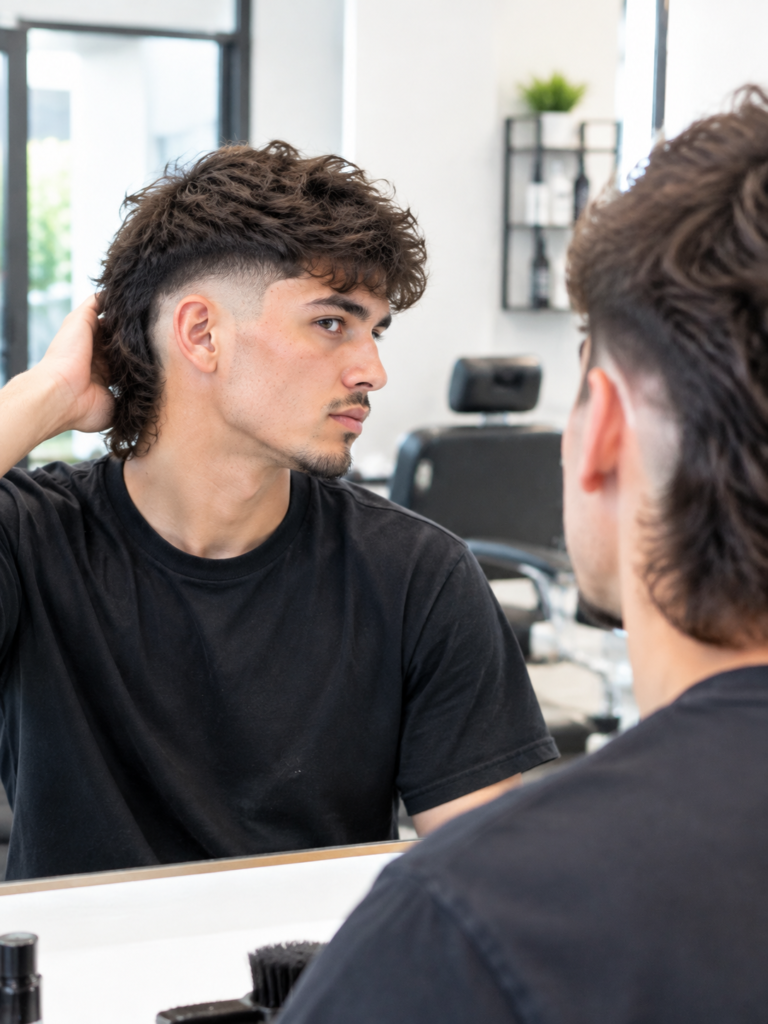
Suitability depends on several things at once, and none of them are hard rules.
Face Shape and Head Shape
A drop fade mullet can work on most face shapes, but proportions change the effect. Fuller, rounder faces can benefit from height on top and shorter, tighter sides to add vertical emphasis. Longer or oblong faces may look longer with a high fade and tall top, so a lower fade and more fringe can help balance. Square faces often suit the sharper, angular line of a drop fade. Heart-shaped or diamond faces can use a fuller back or fringe to balance a narrower chin. The shape of your skull matters too: a flatter back of the head or an unusually prominent crown will show through a close fade, so it’s worth asking your barber to assess it before cutting.
Hair Density
Thick hair holds shape well and can handle longer layered backs, but may need thinning or layering to avoid bulk. Fine or thin hair can look sparse at the back if left too long, so a shorter or more blended mullet usually works better. If your hair is thin on top, a lower fade keeps more visual weight on the sides.
Hairline and Natural Growth Patterns
Cowlicks, crown whorls and uneven hairlines affect how the cut sits. A strong cowlick at the front can make a fringe difficult to control, so your barber may suggest working with the direction instead of against it. A low or uneven nape hairline changes how the back looks, so the neckline should be shaped to suit it. A receding hairline is not a barrier, but a lower fade may look more natural than a high one. This isn’t about diagnosing anything; it’s simply about cutting with what’s there.
Is a Drop Fade Mullet Practical for Your Lifestyle?
Consider your day-to-day. If you work somewhere with a strict grooming policy, check what’s allowed before committing. Sports or helmets can squash the back and make styling harder. Humid climates can add frizz to longer sections. Regular barber visits are part of the deal, so factor in the time and cost. If you want something you can wash and leave, a taper mullet with textured layers may suit you better than a sharp skin fade.
How to Choose a Drop Fade Mullet for Your Face Shape
A practical shortcut is to decide what you want to emphasise or balance:
- To add height or lengthen: Keep more length on top and choose a mid or high fade.
- To soften angles: Use a fringe, more blended layers and a lower fade.
- To add width at the back: Leave more length and weight at the nape with layering.
- To keep proportions balanced: Choose a mid fade and moderate length everywhere.
Your barber will also see things you can’t, so describe what you like and dislike about your current shape and let them suggest adjustments.
How to Ask Your Barber for a Drop Fade Mullet Haircut
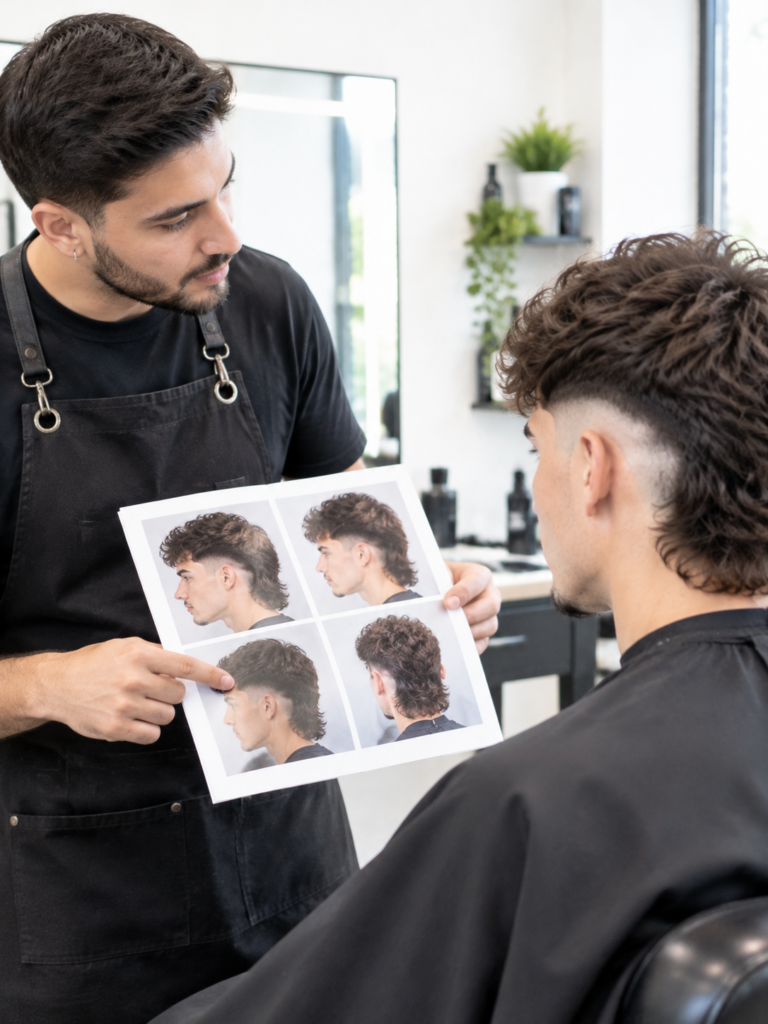
Clear instructions matter more than the right terminology. Most disappointing mullets come from vague requests.
Six Details to Specify Before the Clippers Start
- Fade type: Say “drop fade” and, if you’re unsure, mention you want the line to curve down behind the ear.
- Fade height: Low, mid or high, and where you want it to start at the temple.
- Finish: Skin, shadow or taper.
- Top length: How long you want the top and fringe, ideally shown with your fingers.
- Back length: Where you want the mullet to end (collar, past the collar, shoulder).
- Texture and finish: Choppy and textured, or smooth and blended.
How to Choose the Fade Height and Length of Your Mullet
If you’re new to the style, start moderate. A mid fade and a back that sits just past the collar is easy to adjust later. You can always go shorter on the next visit, but you can’t add hair back. If your hair is curly or coily, remember shrinkage and ask your barber to cut a bit longer to account for it.
What Reference Photos Should You Bring to Your Barber?
Bring two or three photos. Ideally, include the front, side and back views of the cut you want. Look for photos on someone with similar hair type and density, because a mullet on thick straight hair will look very different on fine wavy hair. If you like one element of a photo but not another (for example, the fade but not the length), say so. Photos help avoid miscommunication, but treat them as a guide rather than an exact result.
How to Explain the Neckline, Sides and Back
Describe the neckline in plain terms: natural and wispy, rounded, squared or tapered. For the sides, specify whether you want them tight and clean or slightly longer and blended. For the back, show with your hand where you want the length to end and whether you want layers or a solid shape. If you’re unsure, ask your barber what they recommend based on your hairline and growth pattern.
How to Style a Drop Fade Mullet at Home
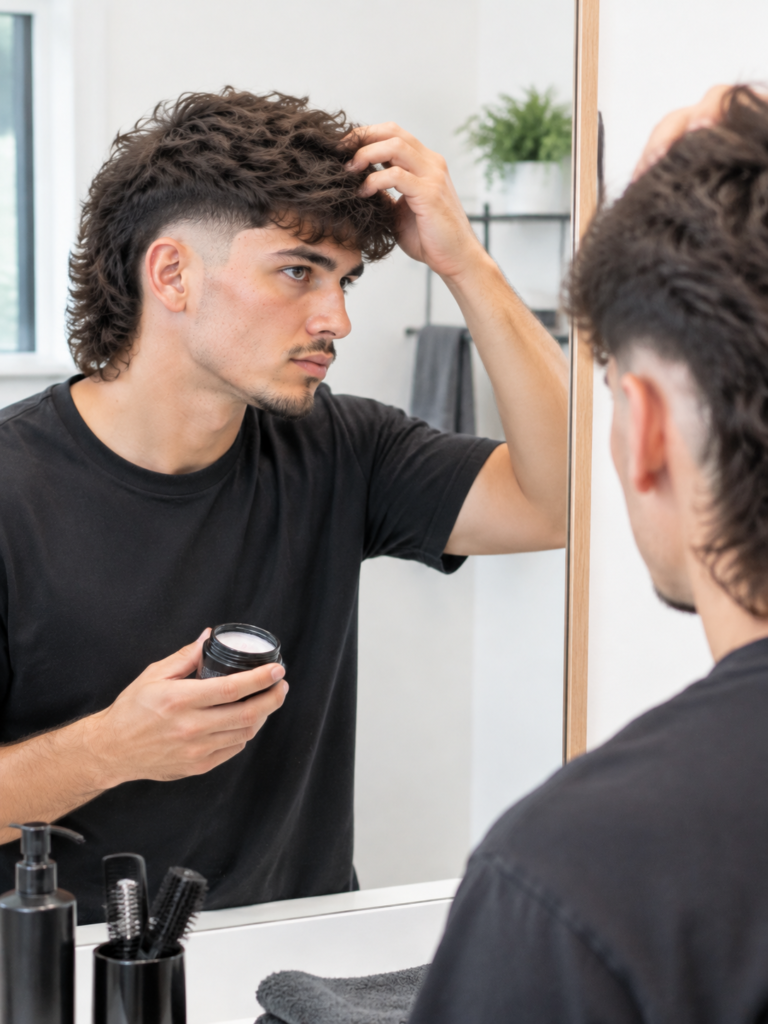
Styling should take a few minutes, not half an hour. The aim is to emphasise the contrast the cut already has.
Styling a Drop Fade Mullet for Straight and Wavy Hair
Start with damp (not soaking) hair. For straight hair, apply a light styling product, such as a cream or paste, to the top and use your fingers or a comb to shape it. A blow dryer helps add lift at the roots. For wavy hair, a sea-salt spray or light cream on damp hair enhances natural movement. Scrunch or let it dry naturally, then finish with a small amount of paste or clay for definition. For the back, use a little product on the ends to keep them from looking limp.
Styling a Drop Fade Mullet for Curly and Coily Hair
Curly and coily hair responds best to moisture. Apply a leave-in conditioner or curl cream to damp hair, working from the ends upward. Define curls using your fingers or a brush, then let them air-dry or use a diffuser on low heat. Avoid brushing dry curls, as that can create frizz. Gel can lock in definition if you want a more sculpted look. For coily hair, keep the length hydrated and consider a pick or comb to shape volume on top and at the back.
Best Products for Styling a Drop Fade Mullet
Choose by what the product does:
- Cream: Light hold, natural finish, adds moisture. Good for softer styles.
- Paste: Medium hold with a matte or low-shine finish. Good for textured looks.
- Clay: Strong hold with a matte finish. Good for messy or spiky tops.
- Pomade: Higher shine and hold. Suits sleeker, combed styles.
- Mousse: Adds volume and light hold, useful for fine hair.
- Gel: Strong hold, often wet-look or crisp. Use sparingly.
- Curl cream or leave-in: Moisture and definition for waves and curls.
- Sea-salt spray: Adds grit and texture, good for wavy and straight hair.
- Heat protectant: Use before blow-drying or any heat styling.
How to Add Texture and Volume to a Mullet
For texture, use a sea-salt spray or a dry texturising spray, then work product through with your fingers. For volume, blow-dry the roots upward and finish with a light mousse or powder. At the back, let the ends fall naturally or lightly flick them with a bit of cream. Don’t overload the product; a mullet looks best when it moves.
Drop Fade Mullet Maintenance, Grow-Out and Skin Care
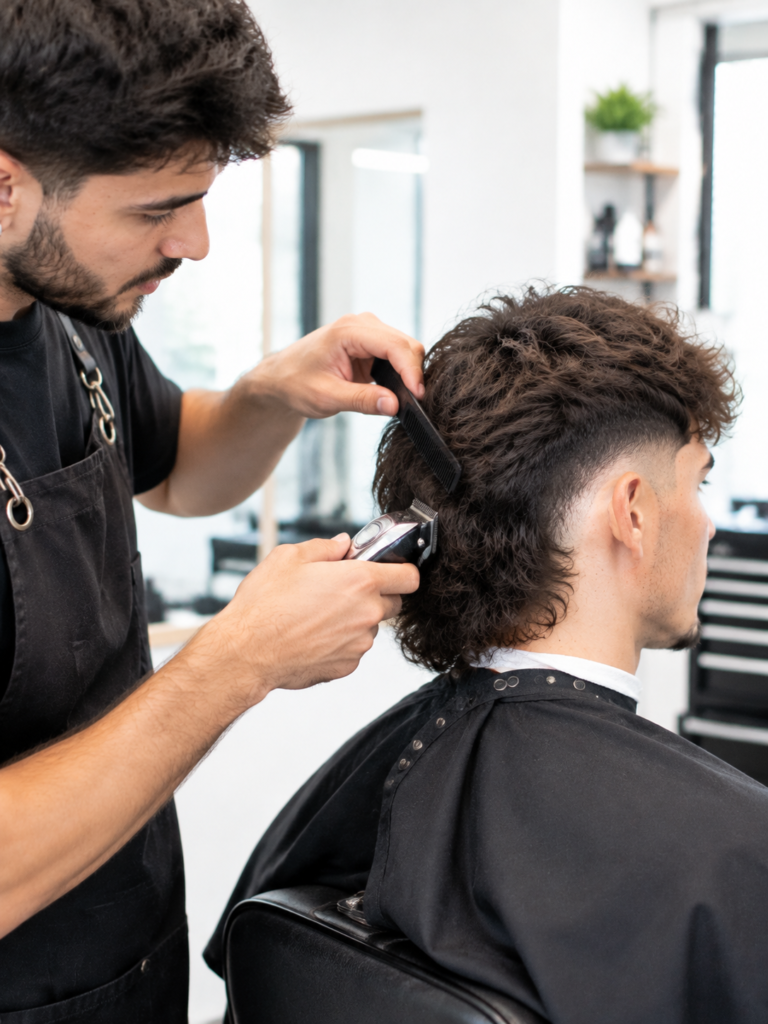
How Often Should You Refresh a Drop Fade Mullet?
Most people refresh the fade every three to four weeks, since that’s when the sides begin to lose their crispness. A skin fade usually needs refreshing sooner than a taper. The top and back can be left longer between visits, and a trim every six to eight weeks usually keeps the mullet shape in check. If your hair grows quickly, you’ll notice the fade softening sooner.
How to Grow Out the Back Without Losing the Mullet Shape
If you want a longer back, grow it gradually and have the sides and neckline tidied regularly. Ask your barber to trim only the ends or the edges around the neckline, not the length. Layering can prevent the back from becoming heavy and triangular. Patience helps: hair typically grows slowly, and the awkward stage is part of the process. Trim split ends to keep the length healthy.
How to Maintain a Drop Fade Mullet Between Barber Visits
Wash regularly with a shampoo suited to your hair type, and condition the longer sections, which dry out faster. Keep the neckline tidy by using a trimmer carefully or booking a quick edge-up. Avoid cutting the fade yourself; the drop curve is easy to distort. Use a little styling product to keep the shape, and sleep on a silk or satin pillowcase if friction creates frizz in longer hair.
What to Do if Close Fades Cause Bumps or Skin Irritation
Close fades, particularly skin fades, can cause redness or small bumps, especially around the neckline. Some practical steps:
- Ask for a shadow or taper finish rather than skin.
- Keep the area clean and avoid scratching.
- Use a gentle, fragrance-free moisturiser after the cut.
- Don’t share clippers, and make sure your barber uses clean equipment.
- Avoid tight collars or hats rubbing the area.
If irritation persists, is painful, or looks infected, see a doctor or dermatologist. This guide can’t diagnose skin conditions.
Drop Fade Mullet FAQs
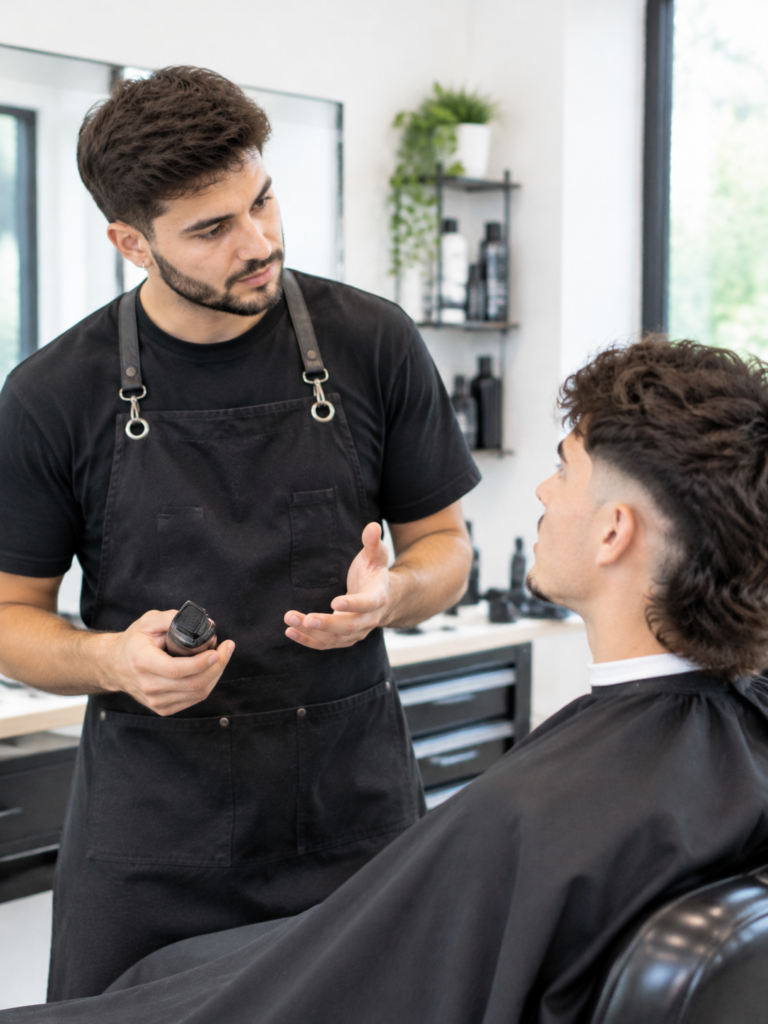
What Is a Drop Fade Mullet Haircut?
It’s a mullet with a drop fade on the sides: the fade line curves down behind the ear, the top stays styleable, and the back is left longer.
Is a Drop Fade Mullet Still in Style?
Yes, drop fade, burst fade and taper mullets are still widely requested in barber shops. A blended, textured version ages best.
What Is the Difference Between a Drop Fade and a Burst Fade Mullet?
A drop fade curves down behind the ear in one flowing arc. A burst fade circles the ear in a semicircle and looks bolder and more separated.
Is a Drop Fade Mullet Good for Curly Hair?
Yes. The fade sharpens the sides while curls add volume on top and at the back. Just allow for shrinkage when choosing length.
How Long Does a Drop Fade Mullet Last?
The fade stays sharp for about two to four weeks. The overall mullet shape can last six to eight weeks with regular tidying.
What Is the Gen Z Mullet?
It’s a softer, blended mullet with a fringe or curtain front, textured layers, and a back that is longer but not extreme.
Can You Get a Drop Fade Mullet With Short Hair?
Yes, but you need some length. A short drop fade mullet with a moderate back is a legitimate style on its own.
Bottom Line: Is the Drop Fade Mullet the Right Haircut for You?
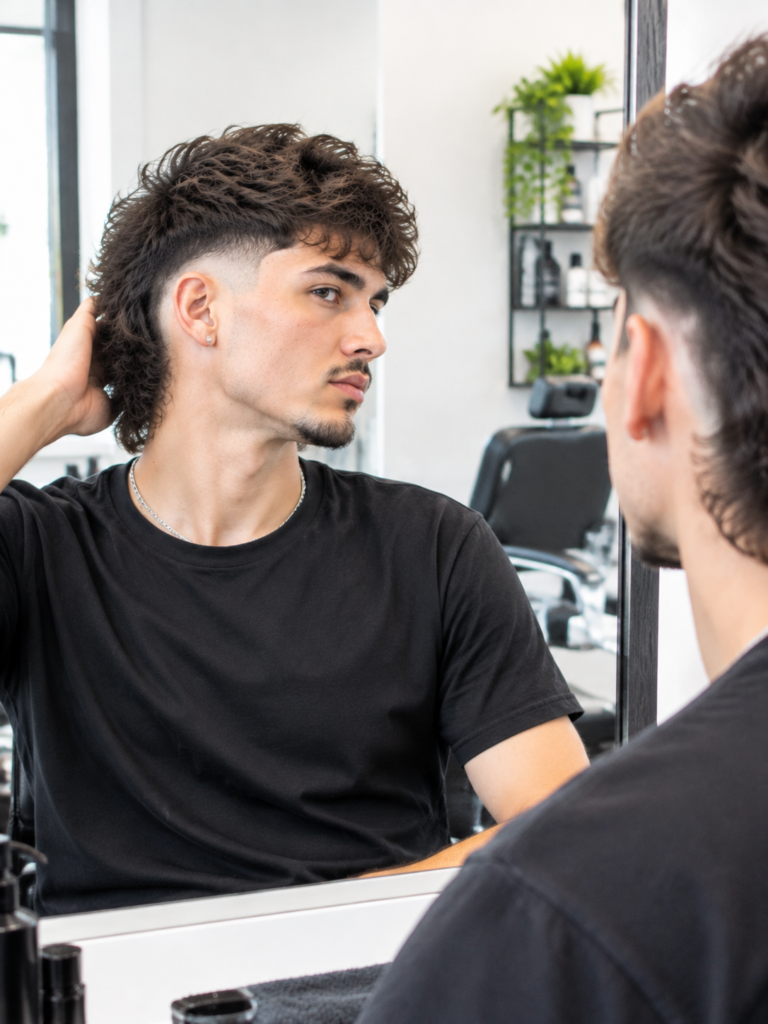
The drop fade mullet works well if you want a cut with a clear shape: tidy, curved sides and a longer back that looks deliberate. It’s flexible enough to suit straight, wavy, curly and coily hair, and it can be dialled up or down through fade height, finish and length.
A few decision points to settle on:
- Want bold contrast? Go for a mid or high drop fade with a shadow or skin finish.
- Want something softer? Choose a low drop fade or a taper mullet.
- Short on time? Pick a textured, shorter version and a taper finish.
- Unsure? Start with a mid drop fade, shadow finish, and a back just past the collar. Adjust at the next visit.
Bring photos, be specific about fade height, finish and length, and ask your barber for their opinion on your head shape and hairline. With a clear brief and regular upkeep, the drop fade mullet is a distinctive cut that holds its shape and looks like you meant it.